
193 St Brigids Terrace

Doubleview, 6018 WA

+61 8 9285 1144

Reception

Mon - Fri: 8:00 - 16:00

Term School Hours

Uncategorized

Let’s Re-Think Failure

30th October 2025

'Failure is success in progress' - Albert Einstein

Many of us don’t relish the prospect of making mistakes irrespective of knowing they are inevitable, and that productive failure can be very instructive.  

Challenging events are necessary for us to become stronger.  Irrespective of whether they are because of a personal mistake or something beyond our control, valuable lessons can be learned when we fail.

So, what is so beneficial about failure?  This sounds counterintuitive.

When things don’t go as expected, young people can be guided to critically reflect upon what needs their attention.  They can learn to adapt their thinking.  This may lead to greater innovation, unanticipated breakthroughs and creativity.  Trial and error can be powerful.  We can all recount examples of amazing ideas which have emerged because people have viewed themselves as problem solvers.

Nurturing, safe contexts, such as our ISWA community, foster critical thinking.  We facilitate learning by doing and encourage students to ask, ‘What if?’ questions. Importantly, with opportunities to make mistakes, young people learn to assume responsibility for their decisions.  It can also foster humility and empathy.

Mistakes aren’t detours — they’re a vital part of life’s journey. We want young people to feel supported to ‘have a go’ in our familiar, inclusive context. Being overprotective can hinder a child’s emotional growth, independence, and ability to cope with real-world challenges. It may seem sensible and kind to protect our young from mistakes but there can be negative consequences. As parents and teachers, resisting the instinctive urge to ‘fix’ can take practice, but it is definitely worth it. Trusting young people to navigate challenges without intervening reinforces our belief in them. It sends a message that they are capable. Without these, young people may become fearful, anxious and their resilience is low.

As a Visible Wellbeing school, we work daily with students to develop their coping skills. They need to learn that struggles are one aspect of embracing growth. When they are too risk averse, setbacks in all facets of their lives will negatively impact their relationships, mental health, and lives beyond school. We provide the healthy balance between timely guidance and freedom.

Here are a few possible questions to pose young people when unanticipated things occur –

  • In what ways can you exploit what happened to view it as a lesson?
  • What did this teach you about who you want to be as a person?
  • Is there a way you might learn to be grateful for this consequence?
  • How do you think this event helped you be stronger?
  • Is there a way that you can approach challenging events in the future so that the outcomes are beneficial?

This article  If you’re not failing, you’re not learning explores what the learning scientist Manu Kapur (who espoused theory of productive failure) believes about reframing our notions of failure.

Outside the school classroom and in the realm of sport, Dr Matthew Cunliffe, a consultant and sport and exercise psychologist at the University of Greenwich, reinforces these perspectives.  He argues ‘Pushy parents are ‘biggest problem in sports performance’ (The Guardian October 18, 2025).  He claims that children with parents who are ‘consistent, responsive, warm, reliable’ in their approach were likely to develop a secure attachment style giving them confidence in their sport. He warns that those who are ‘anxiously attached’ often crave approval and fear rejection. ‘Parents are there for the emotional support, the motivation, the encouragement, but it’s when they step over that line into coaching pressure that you get issues.”

In Let your teen fail, Eden Pontz from the Centre for Parent and Teen Communication (2025) explains why failing in a learning opportunity. Perhaps it’s salutary that we teachers, parents, and all those who dedicate themselves to young people, remember that it’s essential to model ways to manage and optimise failure?


Additional resources for families:

ü  Relationships Australia   

ü  Raising healthy boys at home and in the community Common Sense Media

World Mental Health Day 2025

26th September 2025

‘What we achieve inwardly will change outer reality.’ — Plutarch

October 10, 2025, is the World Health Organisation Mental Health Day.

The WHO defines mental health as:

“A state of mental well-being that enables people to cope with the stresses of life, realize their abilities, learn well and work well, and contribute to their community. It has intrinsic and instrumental value and is integral to our well-being.

At any one time, a diverse set of individual, family, community and structural factors may combine to protect or undermine mental health.”

Mental health can form the basis of emotional resilience, sound relationships and the ability to cope with life’s challenges.

As ISWA is an IB and Visible Wellbeing school (VWB), we are devoted to fostering mental health. Students with good mental wellbeing are curious about and committed to learning, tend to be more motivated and have a sound belief in themselves. They are better able to recognise and manage stress, have collaborative, congenial relationships and engage in a wide range of interests.

Their physical health, including ample sleep, robust, regular exercise and nutritious eating habits contribute to their vitality and robustness. These students routinely attend, are invested in their school communities and are able to draw upon the support of a network of trusted adults.

Of course, mental health exists on a continuum influenced by many environmental, emotional, biological and social factors. It is fluid and at any point along this continuum students face situations which test their capacity to problem solve and cope.

At these moments we ‘check in’ with them, reinforcing that help seeking is normal. We partner with students to identify and name emotions, discuss these in constructive ways and model tools to regulate them. We are curious and empathetic, rather than judgemental. In age and developmentally appropriate ways we build self-care toolkits together, highlight student strengths and discuss with them ways to establish meaningful goals and reinforce beneficial habits. Our aim is that our students relish being at school belonging to our inclusive, welcoming community.

Our commitment to mental health is exemplified in the VWB S.E.A.R.C.H. framework (strengths, emotional management, attention and awareness, relationships, coping, habits and goals) all aspects of which are explicitly woven into lessons and activities, whilst being implicitly evident in every daily encounter. These are innumerable examples of the ways we provide wrap around care for students so they will thrive.

Complementing all that occurs at ISWA, families are informed about agencies such as those listed below. Family GPs can assess a child’s mental health, refer to a specialist and/or help with a mental health care plan.

ü Reach Out to Kids Helpline – 1800 55 1800 — Free, 24/7 counselling for children and young people aged 5–25. They also offer resources, webchat and email support.

  • Raising Children Network – government funded with wide ranging resources and advice for families
  • Headspace for Teens (12-25) – in person and online services
  • Smiling Mind – mindfulness and meditation app for adults, teens and children (free)
  • Beyond Blue – advice, tools and research about mental health
  • CAMHS (Children and Adolescent Mental Health Services) – community and in-patient services for children under 18 years

This October, Mental Health Australia’s theme for World Mental Health Day is Connect with your community. Mental Health Australia is providing daily tips throughout the month for good mental health. 

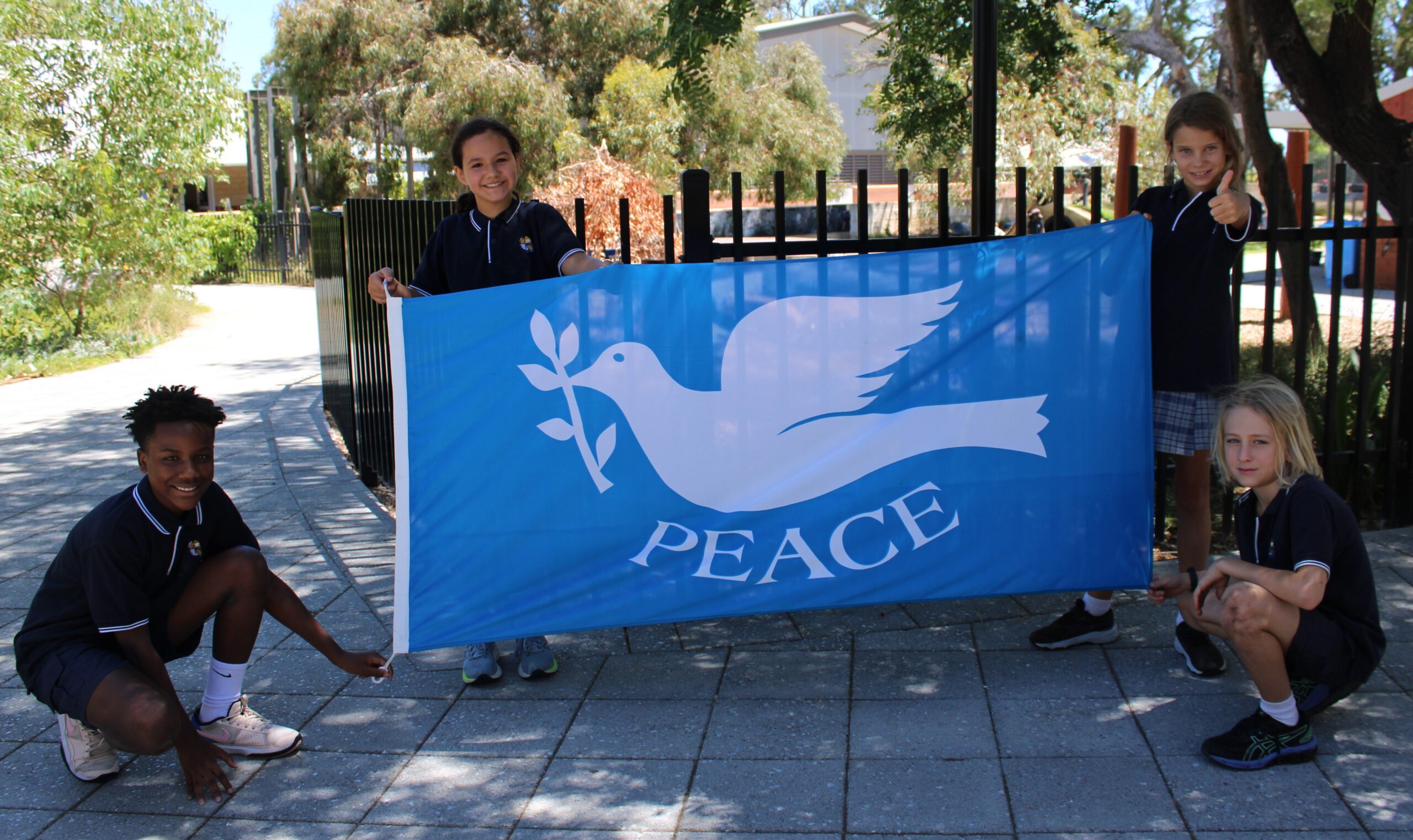
We are ALL worthy of peace and happiness. As A. A. Milne is quoted as saying:

‘You are braver than you believe, and stronger than you seem, and smarter than you think’.

Here is a link to additional resources –

Positive parent child relationships from Emerging Minds

Have a great holiday,

Christine Rowlands

ISWA Counsellor 


The ISWA Welcome – Supporting our newest Swans

1st September 2025

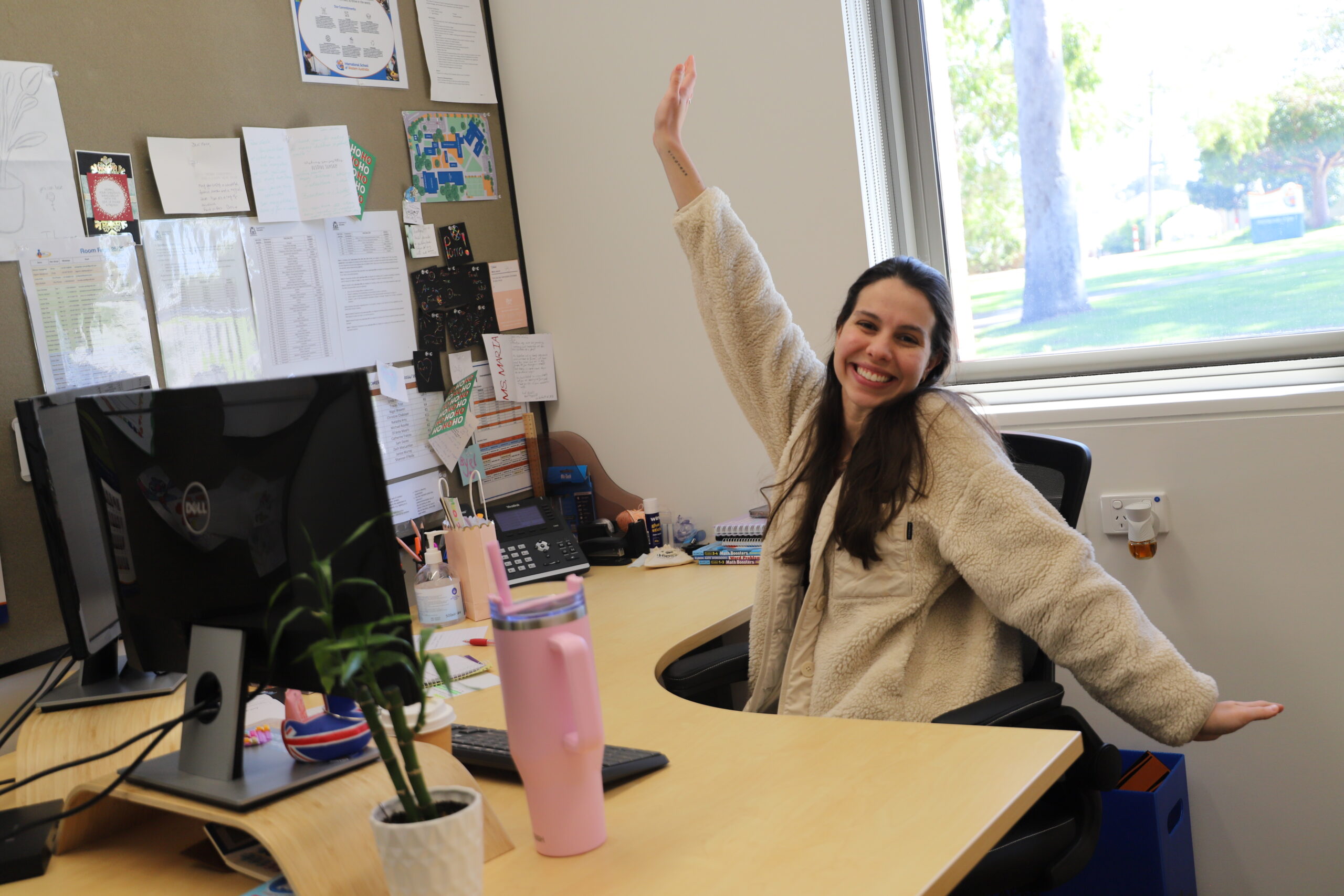
Ms. Jarocki is ISWA’s admissions officer (and volleyball coach). Over the last two years, she has helped more than 100 families settle into our school and our community. With her trademark warm and sunny disposition and her tireless efforts to provide support for those arriving at ISWA from just down the road or from across the world, she is a key part of everyone’s journey at our school.

Ms. Jarocki, our admissions officer

Supporting Our Newest Swans

by Maria Jarocki, Admissions Officer

‘One of the absolute best parts of my job is getting to welcome new students and families into the ISWA community. Whether you’re arriving from overseas, interstate, or just around the corner, we know that starting at a new school is a big step — exciting, a little nerve-wracking, and full of possibility. And we’re here for all of it.

At ISWA, we truly get what it’s like to be new. We understand how important it is to feel safe, accepted, and connected — not just for your child to thrive academically, but to feel happy and at home. That’s why we do everything we can to make sure every student (and every family) feels welcomed, supported, and part of our community from the very start

Our welcome starts well before your child ever steps foot on campus. We share all the need-to-know info — like curriculum, daily routines, uniform fittings, and all the fun extras like co-curriculars and clubs. For our Secondary students, we even introduce them to a friendly “buddy” before school starts.

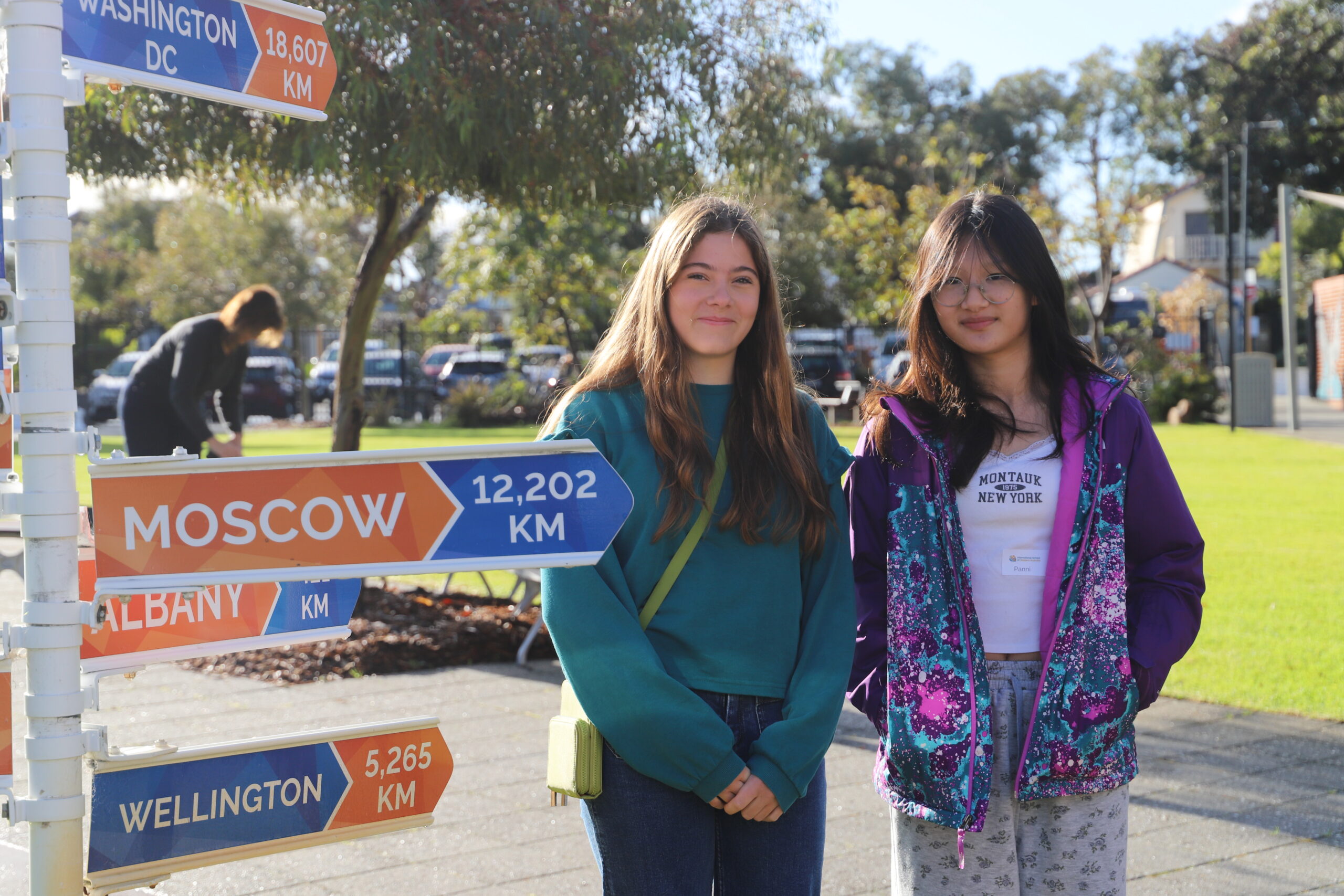
Our Buddy Program is a big part of what makes the ISWA welcome so special. A buddy is more than just a tour guide — they’re your child’s first friend. They help with everything from where to sit at lunch to how to use the lockers, and they’re always there to answer those little questions that make a big difference. These connections often turn into real, lasting friendships — and our students are just brilliant at helping new classmates feel right at home. 

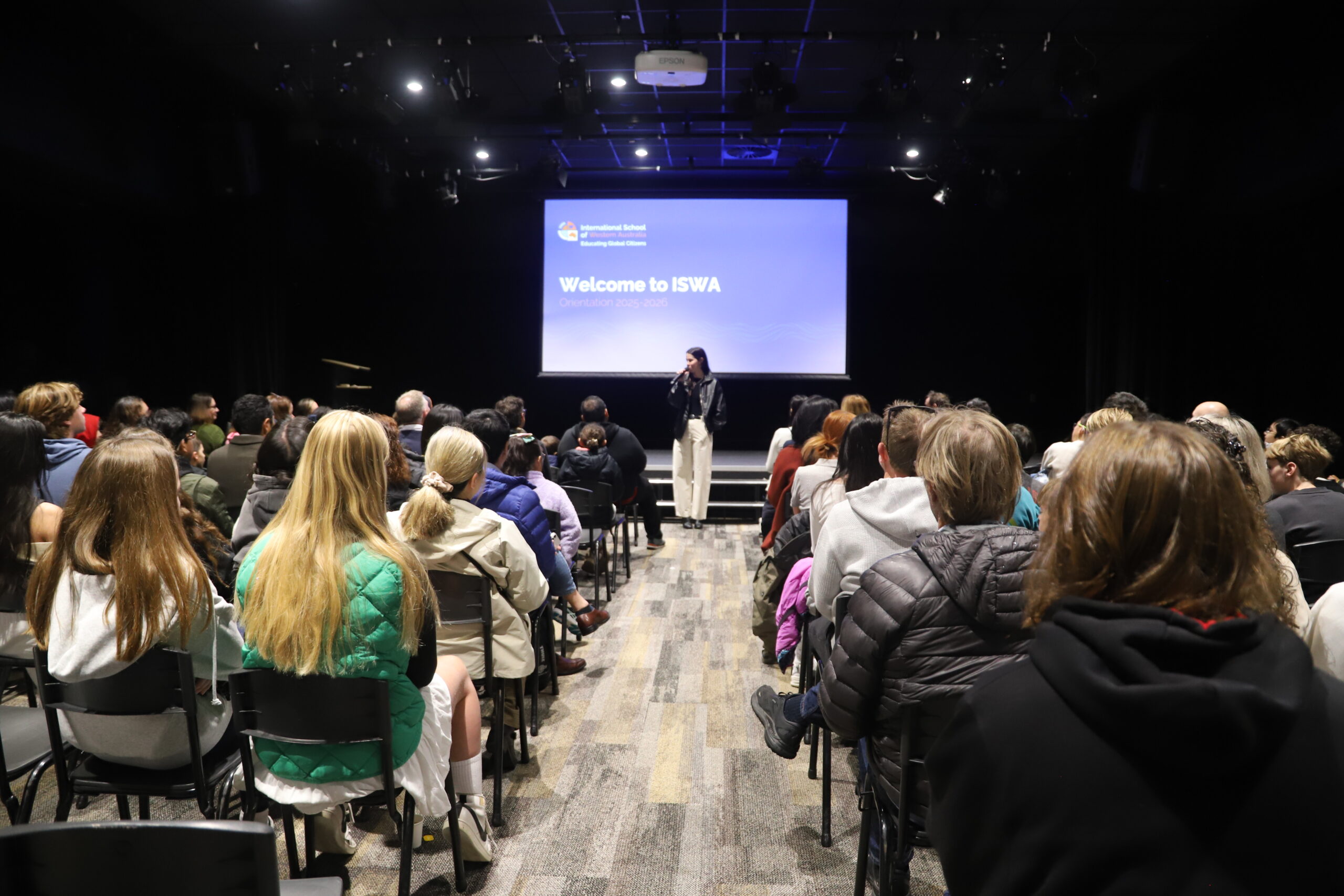
Just before the new school year begins, we also host a special New Student Orientation. It’s relaxed, informal, and a great way for families to meet our teachers, explore the campus, connect with buddies, and get a feel for school life. For students, it means fewer first-day jitters — and maybe even a new friend or two already lined up.  


It’s not just about the students — we make sure our families feel just as included. Our amazing Parents’ Association (PA) runs all kinds of fun and friendly get-togethers, like morning teas, walking groups, cooking classes, and even a dad’s group. It’s a great way to meet people, make friends, and feel part of the ISWA family

We know that starting a new school can feel like a big leap — but here at ISWA, you won’t be doing it alone. From your first enquiry to your child’s first day (and well beyond), we’ll be right here, walking alongside you. You’re not just joining a school — you’re joining a community where you and your family truly belong.’

Wellbeing is Visible *Everywhere* at ISWA

29th August 2025

Anyone who has been on the ISWA campus this month will have been struck by the extent to which wellbeing has been visible.   

All new teachers and students have been introduced to the S.E.A.R.C.H Pathways which are at the core of our Visible Wellbeing programme.  These also reflect our beliefs about how to ensure our school ethos, systems and daily life foster a culture where emotional, psychological and social states are prioritised, hand in glove with our inquiry driven curriculum.  With a seamless transition, not only into this academic year but into different stages of learning, adaptation has been unbelievably quick for many in our community.  They’ve navigated a new city, school, culture, environment and language. We are understandably proud of our multicultural demographic and richer for the contribution made by them all. 

The evidence is clear.  Wellbeing isn’t a single initiative, event or lesson.  It’s about positive relationships built upon trust and care, the commitment we all have to learn, contribute and to never take for granted the opportunities which embody all that we’re so grateful to have. 

 Here are just a few examples from this first month which demonstrate the wellbeing which is visible:

  • Buddies embraced our new arrivals 
  • Families were greeted with cheery welcomes and daily check- ins from every adult, including our knowledgeable Reception staff 
  • Parents joined our Coffee Mornings and New Parent Evenings 
  • Our co-curricular programme offered unique opportunities for social development, leadership training and personal growth.  
  • Athletics Day showcased student skill and team spirit, despite the inclement weather! 
  • The vibrant colour and joy of Book Week costumes and parades reinforced our love of reading
  • Volunteers led terrific PA events, enfolding new families into the ISWA community
  • Strength ‘Shout Outs’ at the primary assemblies recognised and celebrated effort, not only outcomes
  • Excursions and incursions provided chances to extend the thrills of learning beyond the classroom
  • Visible Wellbeing surveys elicited timely data and feedback to inform planning
  • Secondary Home Room sessions thrice weekly provided additional pastoral care

Our warm, collegiate and protective environment promotes resilience. Access to additional support for those requiring it underpins the high priority we place upon inclusion and equity. Confidence is built and everyone then bears witness to the priority we place on the value of every individual. 

Christine Rowlands

School Counsellor
Make it count. Holiday with intention.

11th June 2025

One of the most cherished aspects of holidays is that they can provide the space and time to do what can otherwise be impossible when daily schedules take priority.

Given that our ISWA community now has an extended period away from school, it can be an excellent opportunity to focus on wellbeing.

Here are some suggestions of things which can boost wellbeing.


Reflect. This might be on your growth, achievements, moments of pride and celebration or on mistakes from which you learned. Perhaps there are things you’d like to achieve next year? Try to focus only on what you can control, rather than what it’s impossible to change.

Do what you enjoy: This may be spending unstructured time with family and loved ones, art, sport, writing, reading, baking, playing your instrument, pampering your pet or snoozing in the sun under your olive tree.

Savouring: It’s so easy to default to thinking about the past or anticipating the future. This results in us missing what is occurring in the present, the here and now. Try diverting your attention to each present moment in an accepting, non-judgemental way. This is the essence of mindfulness.

Be in nature: Few things are as therapeutic and restorative as being in nature. It might be a picnic to admire the clouds or spot stars, a bike ride through the forest, a scavenger hunt searching out flowers, gum nuts or leaves , a visit to your closest beach, dolphin spotting on the Swan River or pitching a tent in the backyard for a sleep out. It can also increase a sense of awe. In a safe and calming environment, anxiety is reduced. Brains can wander and rest.

Disconnect: Time away from electronic devices can be freeing. It can quieten the continual ‘noise’ and demands of being ‘tuned into’ the wider world’s expectations. It can be an opportunity to engage with other things and people, in various ways. Given there can be negative and inaccurate information shared, particularly on social media, disconnecting can be liberating and rejuvenating. Brains can be overloaded so using finite cognitive resources for more productive activities or taking a break like this may help brains relax and also alleviate stress.

Do nothing: Counterintuitively, boredom can be a catalyst for creativity and self-reflection. There is research which indicates that having nothing to do can help regulate emotions, reduce stress, improve thinking and problem solving. It is often when we allow our minds to wander or when we daydream that we can identify solutions to thorny issues, appreciate different perspectives and temper our anxiety. Creating a “boredom jar” for children during holidays, one filled with activity ideas, can inspire them when they claim there is ‘Nothing to do!’

Trial Healthy Habits: Holidays can provide the opportunity to create and build new habits for success. Habits help us function efficiently, but they can also reinforce patterns that don’t serve us well. Beginning with microhabits—small, manageable actions that are easy to incorporate into daily routine, anchoring new habits to existing routines and focussing on ‘keystone habits’ – those little actions which have a ripple effect on other areas of life – can ensure this is enjoyable and successful.

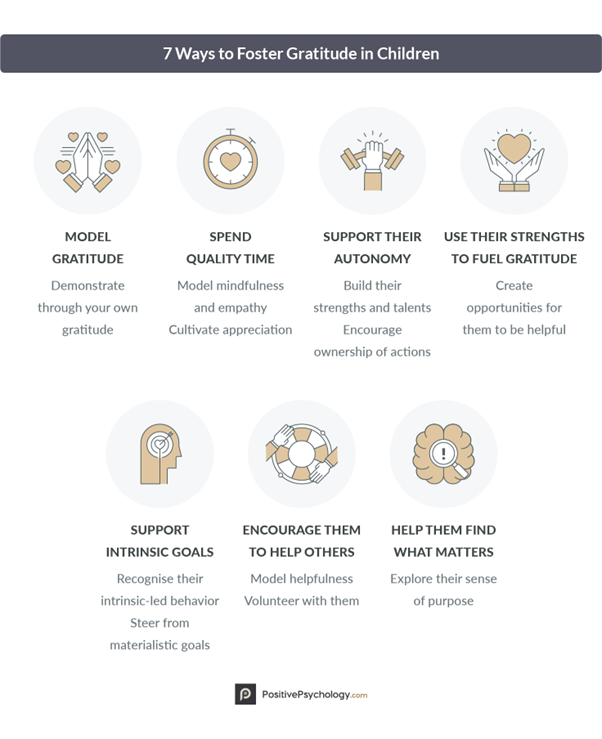
Express gratitude: Gratitude diverts a focus from what’s lacking or negative to what’s positive in life. This helps increase feelings of happiness, contentment, and optimism. Expressing gratitude also releases dopamine and serotonin, those neurotransmitters which enhance mood and reduce stress. Gratitude enhances resilience and strengthens social connections. It also reinforces a growth mindset.

Volunteer: This can be simple yet have a profound impact. Helping out a neighbour, grandparent, a respected charity or anyone in need of support can reduce potentially problematic emotions such as anger and anxiety, provide a sense of purpose, teach new skills and boost self esteem. It’s also a terrific way to meet new like-minded people.

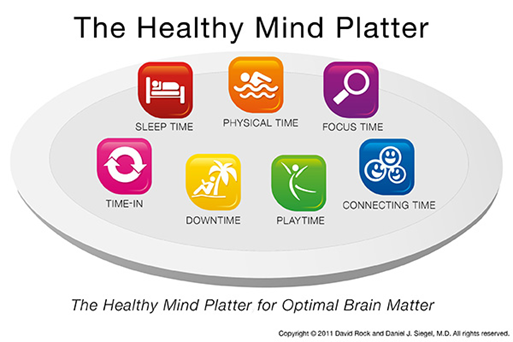
Dr Dan Seigel’s ‘Healthy Mind Platter’ provides another perspective on what he deems essential mental activities for optimum brain health.

The Healthy Mind Platter has seven daily essential mental activities necessary for optimum mental health. These seven daily activities make up the full set of “mental nutrients” that your brain and relationships need to function at their best. By engaging every day in each of these servings, you promote integration in your life and enable your brain to coordinate and balance its activities. These essential mental activities strengthen your brain’s internal connections and your connections with other people and the world around you. Dr Dan Seigel Healthy Mind Platter

Additional Holiday Resources

Feeling overwhelmed, or experiencing heightened emotions over an extended period, could be a sound reason to visit a trusted GP.  Youth Friendly GPs are trained to work with young people (see link Youth Friendly GPs).  GPs offer face-to-face support and are trained in both physical and mental health issues.  The GP can also provide a ‘mental health-care plan’.  These provide for six free (or Medicare-subsidized) sessions with a psychologist. The GP can be asked for a referral to a completely subsidised or an extremely low-cost option, too.

From the age of 15, young people can have their own Medicare cards. This provides access to the GP without the need to use the family’s Medicare card. (Six ways to get help with mental health)

Lifeline Australia 📞: 13 11 14 – 24/7 crisis support and suicide prevention services

Beyond Blue 📞: 1300 22 4636 – information and support for anxiety, depression, and suicide prevention

SANE Australia 📞: 1800 187 263 – support and information to those affected by mental illness

Headspace 📞: 1800 650 890 – support for young people aged 12-25 and their families, coping with mental health challenges

Kids Helpline 📞: 1800 55 1800 – 24/7 helpline for children and young people

Suicide Call Back Service 📞: 1300 659 467 – professional counselling and support for those affected by suicide

MensLine Australia 📞: 1300 78 99 78 – support for men navigating relationship issues, family problems, and mental health challenges

1800Respect 📞: 1800 737 732 24/7 support for people impacted by sexual assault, domestic violence or abuse

Carers Australia 📞: 1800 242 636 – support and resources for family and friends caring for individuals with mental illness

QLife 📞: 1800 184 527 – support for LGBTQIA+ individuals and their families

Butterfly Foundation 📞: 1800 33 4673 – support for individuals contending with eating disorders and body image concerns

13YARN 📞: crisis support for indigenous Australians

Wishing everyone in the ISWA community a safe and memorable holiday.

Christine Rowlands

School Counsellor
AI and ISWA: Developments in Teaching & Learning Tools

27th May 2025

Artificial Intelligence tools at ISWA

by Staale Brokvam, Director of Technology 

As part of our efforts to support teaching and learning at ISWA, we have been focusing on artificial intelligence (AI) and are developing an AI policy to provide clarity and guidance for our staff and students. AI is integrated into our learning management software, Toddle, and the Toddle team is gradually integrating AI into various modules, with benefits for both teachers and students. AI can work as a teaching assistant, automating certain time-consuming tasks and freeing teachers up to spend more time in direct interaction with students. It can also help to provide personalised learning support for students.

For an in-depth reflection on our work with Toddle, please watch the video below:

AI That Supports Teachers

Teachers are using AI in Toddle to assist with lesson and unit planning. Toddle’s AI tool has been trained on a large body of educational materials, including the full documentation of the IB PYP, MYP and Diploma framework, as well as the West Australian SCSA standards. 

It assists teachers with designing high-quality, standards-aligned lessons by suggesting learning objectives, instructional strategies, and assessment tools. It reduces planning time and allows teachers to focus more on engaging students, differentiating instruction, and creatively enhancing the learning experience.

Personalised AI Tutors for Students

Toddle AI Tutors are a new learning activity type which teachers can configure and assign to students. An AI tutor is a chatbot which can provide each student with personalised support, guidance and feedback. Interactions with the AI Tutor can take many forms, depending on the subject and the intended outcome: students can play math games, explore or reinforce key concepts from their current unit, revise skills, engage in written or spoken conversation with the tutor in French or Spanish, brainstorm for a project or essay, and more, all while learning at their own pace. 

Importantly, the system also gives teachers insight into student performance – highlighting individual strengths and areas for growth in relation to learning goals, and providing teachers with summary data for the class as a whole, allowing them to plan differentiated instruction going forward.

Developing an AI Policy

While AI presents a number of opportunities we are also aware of potential risks, and in order to provide safeguards and guidance for responsible use, we are working on an AI policy for ISWA. This will guide how we use AI technologies across the community. Important elements of the policy include: 

  • Privacy and data security – ensuring student information is safe
  • Bias and accuracy – addressing inherent concerns with AI
  • Transparency – clearly indicating when content is AI-generated
  • Academic honesty – setting expectations for appropriate student use of AI
  • Evaluation guidelines – establishing a review process for AI tools
  • Scale of appropriate usage – defining usage levels (e.g. “No AI” to “Free Reign”) for clear communication on permitted AI use per task

Looking Ahead

As AI becomes a more common part of life and learning, our goal is to ensure it serves our community in thoughtful, student-centered ways. We’re excited by how AI can personalize learning, support teachers, and provide timely feedback. At the same time, we want to balance innovation with responsibility, so that students not only benefit from these tools, but also learn how to use them ethically and effectively.

Staale Brokvam, Director of Technology

Universal Design for Learning in Early Years at ISWA

9th May 2025

What is Universal Design for Learning? Hear from our Year 1 Teachers:

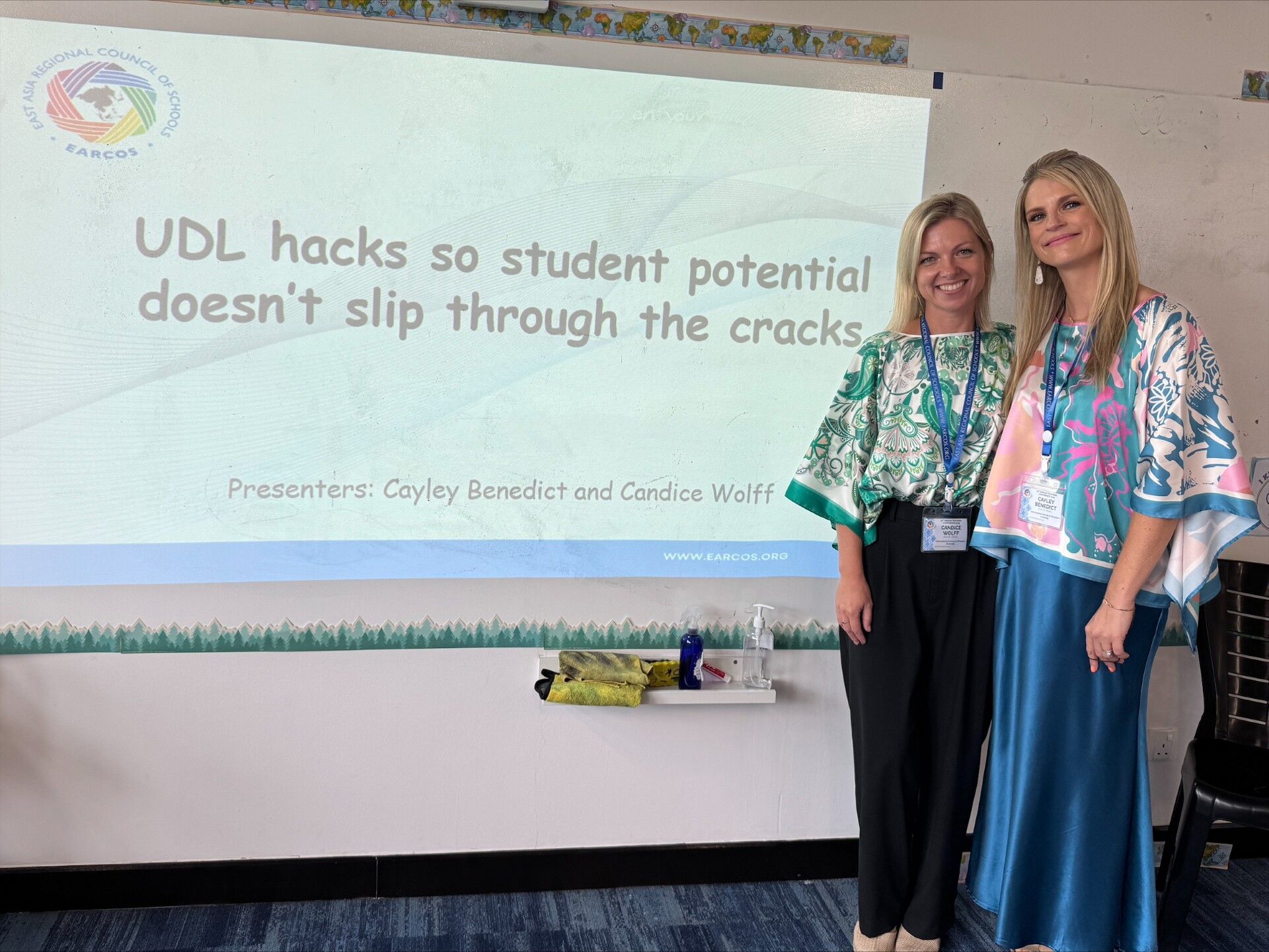
We recently presented at the Earcos International Teachers Conference in Kuala Lumpur. Our presentation was titled, ‘UDL hacks so student potential doesn’t slip through the cracks’. You may ask yourself the question, “What is UDL?”

UDL or Universal Design for Learning is not just a framework for curriculum design. It is, at its core, a powerful belief that every student, regardless of their background or learning style, is capable of success. It challenges us as educators to consistently reflect and rethink our approach to teaching, advocating for instructional methods that are not ‘one-size-fits-all’, yet intentionally designed to meet the diverse needs of all learners. 
 
UDL is based on three core principles which provide multiple means of engagement, representation and expression. By applying these principles, we can create a more inclusive, flexible, and supportive learning environment, where every student has the opportunity to thrive. 
 

Within our Year 1 classes we implemented ‘hacks’ or strategies based on the UDL principles to support students to reach their full potential through goal setting, learning playlists and ongoing feedback and reflection. Encouraging students to set personal, achievable goals, helps them to take ownership of their learning and reinforces the idea that growth comes from effort and persistence. The learning playlist provides students with a variety of materials and empowers them to take charge of their learning. It offers choice for them to engage in activities that work best for their unique learning styles, fostering autonomy and engagement. Students also have the option to complete certain tasks individually, with a partner or in a small group. Whilst students engage in playlist activities, it gives us the opportunity to connect with them, develop meaningful relationships and strive towards academic success.

Feedback and reflection is an important strategy that informs our planning and student understanding. Offering regular, constructive feedback and opportunities for self-reflection helps students understand their progress and recognise areas for growth. This reinforces the belief that improvement is always possible. Student agency has flourished alongside a collective classroom culture of ‘Growth Mindset’ where students encourage one another to believe in themselves, to achieve optimal learning and success. 
 
After receiving heartwarming feedback from our session and gaining valuable professional growth through workshops led by inspiring educators worldwide, we are more motivated than ever to expand our collection of teaching strategies and tools to share with fellow educators. Additionally, we are eager to continue our research in this field of learning—embracing our journey as lifelong learners in Year One, where our class mantra reminds us: “Without believe, there is no achieve.” 
 
– Candice Wolff and Cayley Benedict (Year 1 Teachers)

Look for the Beauty

27th March 2025

Think about the last time you were awed by beauty.

Perhaps it was a rising moon, a friend’s smile, a fluffy, toffee coloured puppy, a newborn baby or a stunning landscape. Intentionally placing our attention on the phenomenal wonders we’re surrounded by each day can protect us from negative experiences and reinforce our wellbeing.

A core pathway in the Visible Wellbeing programme at ISWA is attention and awareness. Learning about and practicing these skills is intrinsically linked to wellbeing. According to Professor Lea Waters, creator of ‘Visible Wellbeing, ‘Attention is our ability to focus, whether on inner aspects of self, such as emotions and physical sensations, or on external stimuli. Awareness refers to the ability to pay attention to a stimulus as it occurs. Wellbeing is improved when individuals are aware of, and can consciously direct, their attention’.

From a pragmatic perspective, the ability to be aware and attend to the world around us is essential to survive. There are inherent dangers in this magnificent world, so we protect ourselves by being informed, respectful and mindful of them. It is also commonly understood that without the ability to set our minds to focus and attend to learning, we would remain ignorant and isolated.

Alternatively, though, when we offer up our attention to people, places and experiences or savour them, this can reap phenomenal benefits. Bryant and Veroff (2007) define savouring as ‘…attending, appreciating, and enhancing positive experiences that occur in one’s life.’ 

What is savouring? Definition, meaning and examples Berkeley

The ISWA Kindy children are masterful at noticing wonders around them every day. They relish moments of close observation such as discovering a budding strawberry or a passionfruit emerging in its infant phase from an exotic flower. They immerse themselves in novel textures such as chocolate coloured mud in their playground creek. They are quick to share their surprise and glee at spotting a kookaburra effortlessly balanced on a branch. They devour celebratory treats, such as birthday cakes, with gusto, oblivious to smears of icing on their faces.

We are all familiar with the cliches entreating us to ‘Stop and smell the roses’ or to ‘Hasten slowly’ and we often remark that ‘Time flies’. As hackneyed and trite as such sayings are, they contain a kernel of truth which is quite profound. This is that our world is sublimely beautiful. We live at a hectic pace in a bustling, frequently overstimulating world.

Deliberately thinking about positive emotions and what generated them is one way of savouring in the present. Buddha says What we think, we become’ so if we are intentional in trying to connect to the present moment, this will spark delight. Alternatively, we can recall moments which have enraptured us. Our imaginations are marvellous tools to help us anticipate what will happen and we can also savour the past. For example, a school camp with Year 4 friends, a relative’s memorable wedding or finally passing our driver’s licence. Mindfully holding onto, and savouring, what feels good, such as the sounds, sensations, sights and smells we experience can be immeasurably enriching.

In the words of Barbara Fredrickson’s “Broaden-and-Build Theory” of positive emotions, such emotions –

“…broaden an individual’s momentary thought-action repertoire: joy sparks the urge to play, interest sparks the urge to explore, contentment sparks the urge to savour and integrate, and love sparks a recurring cycle of each of these urges within safe, close relationships.” (2004)

Positive emotions are not just happy feelings, though. They can be the foundation for those fleeting but meaningful moments that make life worth living. They also have other advantages. They can benefit physical and psychological health, promote creative thought and action, support quicker recovery from stress and ‘facilitate more effective coping … buffering us against symptoms of depression’ (Dolphin, Steinhardt + Cance, 2015). At ISWA we encourage students to recognise such emotions and reference them in differentiated ways using specific language such as joy, contentment, hope, gratitude, enthusiasm and affection.

Notions of beauty, of course, vary widely across cultures and eras. Interpretations depend on variables such as geographic region, traditions, religion, age, gender, and socioeconomic status. Perceptions of what is beautiful vary, too, impacting the ways people behave and what is cherished. The earliest philosophers, such as ‘Plato (428–347 BCE), conceived beauty as a form of perfection and eternal truth. Aristotle (384–322 BCE) associated it with harmony, proportion and order’. (Eliseth Leão, 2024) Beauty can also open boxes of tender memories.

So, there are an unlimited range of ways cultivating our attention and awareness can benefit our wellbeing. Engaging in the expressive arts can unite and heal us stimulating our creativity and imaginations. Relishing being outside in nature can amplify good feelings. .Acts of kindness and generosity or a genuine warm smile can be beautiful. Kahlil Gibran said: ‘Beauty is not in the face; beauty is a light in the heart.’

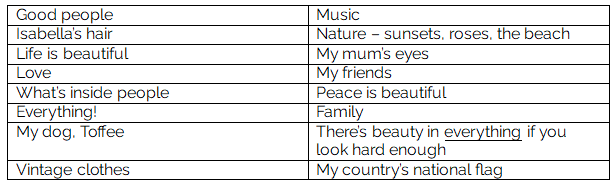
When I asked students, across a range of ages, ‘What is beautiful?’ here are a few of their responses –

When reflecting upon the fundamental meaning of life, Kathryn Mannix, a palliative care consultant (2025) suggested –

‘…wisdom comes when we recognise the pricelessness of this moment. Instead of yearning for the lost past, or leaning into the unguaranteed future, we are most truly alive when we give our full attention to what is here, right now.’

and it is difficult to argue with this perspective.


Christine Rowlands

School Counsellor



The Lasting Value of Learning Journeys in Schools

26th February 2025

In education, certain practices become so ingrained in the life of a school that their true value can sometimes be overlooked. Learning journeys—dedicated times when students share their learning with their families—are one such example. They are not a new concept, but their impact remains profound, particularly when thoughtfully implemented in a way that truly honours student voice, agency, and academic rigour.


At the International School of Western Australia (ISWA), an IB World School delivering the Primary Years Programme (PYP), learning journeys are more than just a display of student work; they are a reflection of the inquiry-driven, student-centred learning that defines PYP education. Unlike in non-PYP settings where learning showcases may primarily focus on teacher-directed outcomes, PYP learning journeys place students at the heart of the experience, empowering them to take ownership of their learning and communicate their progress in meaningful ways.

Why Learning Journeys Matter

For students, learning journeys provide a unique opportunity to reflect on their growth, articulate their understanding, and build confidence in their ability to express their learning. When children guide their parents through their classroom, explain their inquiry, and demonstrate their skills, they are not simply recalling information—they are developing critical communication skills, self-awareness, and a sense of pride in their achievements.

Furthermore, learning journeys are a testament to the rigour embedded in the learning process. Students are not merely showcasing polished final products; they are sharing the complexities of their inquiry, discussing their challenges, and highlighting how they have refined their understanding through feedback and perseverance. This process strengthens their metacognition and fosters a growth mindset—essential skills for lifelong learning.

For instance, a Year 6 student might walk their parents through an inquiry into environmental sustainability, showcasing a self-directed research project, explaining their data analysis, and reflecting on their personal actions to support a greener future. Another Year 1 student might demonstrate a mathematical concept they previously struggled with, explaining how they overcame challenges through persistence and inquiry. These moments are powerful—not only do they celebrate progress, but they also reinforce the real-world relevance of learning.

The PYP Difference

The PYP framework at ISWA enhances the learning journey experience by embedding a deep sense of reflection, agency, and academic depth into the process. Students are not just presenting their work; they are engaged in metacognitive discussions, evaluating their growth, and setting personal goals. They understand that learning is not about the end product alone but about the process—how they think, question, and connect ideas across subjects.

In contrast to more traditional models of education where learning is often assessed through standardised testing or teacher-led reporting, PYP learning journeys emphasise student-led conferences, formative feedback, and authentic demonstrations of understanding. Parents leave not just with a sense of what their child has learnt, but with an appreciation for how their child is thinking, collaborating, and developing as an inquirer.

The Power, Pride and Joy of Sharing Learning

Beyond academic rigour, learning journeys offer something equally vital—the deep emotional connection that comes with sharing growth with those who matter most. When students present their learning to their families, they experience immense pride and joy in their achievements. The encouragement and validation they receive from parents, grandparents, and guardians fuel their motivation and reinforce their belief in their own abilities.

The act of explaining their learning in their own words solidifies their understanding and builds confidence. Seeing their parents engaged and excited about their progress reminds students that their efforts matter and that learning is a journey best celebrated together. These moments of connection create lasting impressions, fostering a love of learning that extends beyond the classroom.

At ISWA, the PYP approach ensures that learning journeys are more than a tradition—they are an integral part of fostering lifelong learners who understand the value of their own growth. As schools continue to evolve, reaffirming the significance of these experiences will ensure that students remain at the centre of their learning, with their voices leading the way and their achievements celebrated by those who cheer them on the most.


Paul O’Brien

Head of Primary

It is not ‘No’. It’s just ‘Not yet’.

1st November 2024

It’s something all humans have in common – the inclination, occasionally, to succumb to the temptations of instant gratification. Our baser urges can devilishly hijack our noble intentions at any moment. If this is infrequent and doesn’t result in anything life threatening or illegal it can be understandable and forgivable. Who amongst us hasn’t eaten that second serving of chocolate gateau or bought that pair of tantalisingly impractical but gorgeous shoes? 

But what is ‘delayed gratification’? The widely agreed definition is ‘the ability to delay an impulse for an immediate reward to receive a more favourable reward at a later time ‘.  This sounds sensible and simple; however, it takes work.  

'A Good Choice May Go Unrewarded for a Long Time'

Many of us are familiar with the famous ‘marshmallow test’ undertaken with Walter Mischel, a psychologist who offered a group of young children the choice of eating a marshmallow immediately or waiting a short time and receiving two instead. As anticipated, when the experimenter left the room, some children failed to resist the temptation of the sweet, eating it immediately, whilst others used a range of ways (some rather amusing to witness) to delay their enjoyment of the marshmallow and earned two marshmallows. Mischel then examined the ramifications of this experiment demonstrating that those who waited seemed to have advantages later in life, such as better academic performances and fewer behavioural issues.

So, in what domains could we delay gratification and why do they matter?  Research has indicated that the ability to delay reward is a trait of successful people.  Examples of a few of areas these are: 

  • Financial – accumulating money by controlling the temptation to buy goods at the annual sales or clicking to purchase items on Amazon or Temu. This could result in the long yearned for European holiday.
  • Health – dedicating time to buying and preparing nutritious food instead of calling into McDonald’s after work for the sake of expeditiousness. Eschewing the temporary high of alcohol, nicotine and other drugs.
  • Social – declining invitations and entreaties from friends to dedicate time to learning and study instead.
  • Relationships – managing urges to respond in the heat of a moment with a partner or friend in retaliation for something they’ve said or done.
  • Achievement at work – developing a strong work ethic, remaining self-motivated and focussing on a long-term goal


The ability to regulate our emotions and behaviours is a fundamental element of  executive function.  These are the group of skills which allow us to plan, monitor, and attain goals.   Instant gratification can be a habit, one we can control and eliminate but to do so requires an awareness of such impulses and a commitment to new habit formation. 

Young people need to know that impulses pass and that they can cultivate self-regulation. Research indicates that those who master this are more self-reliant and self-confident.  Delayed gratification can be perceived as a muscle we can grow for the benefit of our future selves.  Given many young people are immersed in, and powerfully influenced by, messages of ‘You can have what you want NOW’ and ‘You deserve to treat yourself today’ they may be unprepared to cope with life’s inevitable setbacks and unfamiliar with how to problem solve.   

Mastering self-discipline takes dedication to an incentive and ongoing commitment.  One challenge is that it can be uncertain when the long-term goal will be attained.  Our personalities, mental and physical health, social and work contexts, as well as other individual characteristics, all impact our success in this arena.  In adolescents, instant reward centres in the brain are ill developed which means instant gratification is even more appealing.

What, then, are the ways we can improve our predilection for instant rewards? Examples include –

  • Thinking about consequences before acting.
  • Visualising ourselves coping successfully and fostering self-belief.
  • Becoming aware of, and managing, our emotions so they don’t overwhelm or control us.
  • Setting achievable and realistic goals.
  • Being clear about how long we need to wait.
  • Becoming attuned to triggers which hijack our self-control.
  • Factoring into our lives routines and rewards.
  • Avoiding tempting situations.

Naturally, our levels of self-control vary throughout each day due to a myriad factors, And of course, we’re all trying to balance spontaneity, joy and living in the present with an awareness of what is in our  best interests and the interests of those around us. We’re not robots.  We possess passions and predilections which make us intriguing and endlessly fascinating.   However; it is worth trying to become more self-aware and self-disciplined so that we don’t sacrifice what we what most for what we think we want immediately.

Christine Rowlands

Switch it Off.

20th September 2024

Go on.  Switch if off.

Spring, in all its glory, is here.  The natural environment is calling.  School holidays are upon us.  It’s timely to consider doing something many of us vow we should and that is to step away from screens.

Of course, it’s easy to demonise time on screens and succumb to black and white thinking blaming them for untold (and even yet to manifest) ills in society.  In the developed world it can prove impossible to work, learn and communicate without them and it would be a naive and uniquely self-sufficient soul who advocated dispensing with them altogether.   This, then, may be a chance to modify our dependence upon technology and screens or tackle our compulsive habits which preclude us from sampling other valuable aspects of life.

Research from many reputable sources convincingly argues for us to increase our awareness of, and involvement in, the technological lives of our young people.  Our children may be tech savvy, but they don’t always possess the wisdom or insight to recognise that their values and beliefs are being forged in often nefarious ways or their thoughts manipulated.  During this vulnerable period, they can easily and quickly adopt attitudes and practices which are bigoted, blinkered and even offensive. Their critical thinking skills can be stymied as misinformation, stereotyping, bias, propaganda and selective reporting masquerading as truth populate parts of the online world.

The temptation to gravitate toward the scandalous, salacious and subversive simply means we’re human.  We’ve all fallen prey to the lure of instant gratification. Continually comparing ourselves to false representations of an ‘ideal’ form, though, or individuals who are either famous or notorious, can be dangerous.  

Young people are clocking up increasing time on devices, and are less engaged in physical activities.  An American study of  40,000 children  revealed that once the one hour mark per day is reached  ‘screen time was associated with less curiosity, lower self-control, less emotional stability and lower psychological wellbeing’.  Worryingly, too, 14- to 17-year-olds who used screens throughout the day were ‘...twice as likely to have been diagnosed with depression’.  (The secret to why exercise is so good for mental health: hope molecules). 

Social media usage has also been associated with a negative impact on ‘...attention span, memory, and overall brain function’ (Online bullying and mental health May 26 2024 ABC).The younger users of social media are ‘more likely than older ones to have body image issues, while kids who use Instagram or Snapchat before age 11 face a higher risk of online harassment’  (Computers in human behaviour) and (Computers in Human Behaviour 2022).

There are increasing calls from experts for governments and technology companies to implement policies and restrictions on social media for the benefit of children’s wellbeing   (US surgeon general issues advisory on profound risks).  A May 2024 report from Common Sense Media (Common Sense Media Report about link between social media and mental health May 2024)  outlines that young people ‘…experience stressful content and must actively take steps to manage their exposure to it’.  Excess time on screens can hinder the ability to interpret emotions and it can trigger aggressive conduct.

Of course, it is easy to highlight problems, not so easy to remedy them.

Those of us privileged enough to work alongside young people know that they rely on digital technologies to connect with others, to be ‘heard’, understood and to link to communities they may not find in their everyday lives.  They are also seeking to explore, escape and sample other worlds.  On occasion, they even research ways to benefit their own health. Adolescence, a period we now know lasts until at least 25 years, is a crucial one for brain development.  During this stage, young people are extremely vulnerable to peer pressure and their sense of self-worth is forming. Excessive time spent in front of a screen can diminish executive functioning and academic performance. Prolific gamers have been found to have ‘higher rates of eye fatigue, back pain, and wrist strain than casual gamers…aspiring eSport gamers have higher rates of body fat and decreased bone mineral density’ (Daniel Stjepanovic  Heavy Screen Time for Children Research).  We’re aware that many of our young people struggle to just sit with themselves without something to “do”.  The word ‘boring’ is pejorative and the antidote is often to click, scroll, ‘like’, view, check and troll.

There are many benefits to detaching from screens.  These include increased sleep, more time to move and maintain healthy weight, increased productivity, creativity and greater impulse control. We want our young people to self-regulate and be proportionate in their approach to technology.

Here are a few of the innumerable practical tips to reintroduce more balance into technology-dominated lives and treasure time away from daily obligations, particularly as school holidays are looming –

  • Charge all electronic devices outside the bedroom. This is fundamental.  Banish them.  They are very distracting and tempting, even if they are in the same room where people are attempting to work or rest.  Notifications should be switched off.
  • Go outside, Hike, head into a local or national park. Explore, marvel at, and relish, nature.    Bike ride. Take up fishing. The CEO of the Australian Psychological Society, Zena Burgess, says ‘…a sunset can connect us with something bigger than ourselves’. She says research highlights the positive impact natural environments can have, especially on low levels of anxiety or negative thinking’. 
  • Head out of the city. Take a train or bus to a new destination. Play some uplifting music or a collection of podcasts on the journey.
  • Start journaling. Sketch, paint, take up photography. Challenge family members to board games. Knit, sew, experiment with new recipes or read.

Screens are NOT evil incarnate neither is all screen time equal.  Phones help young people stay safe and keep in touch with loved ones. Technology is a privilege in the 21st century world but needs to be used in moderation, certainly never substituted for face-to-face communication.

So go on.  Step away from those screens for a major proportion of every day.  Separate from those influencers, leave Taylor Swift in the adoring arms of other Swifties for a while.  You may find that life holds so many more opportunities and delights.


Christine Rowlands

Screen time guidelines for children and young adults.  

(source: The Sydney Children’s Hospital Network)

  • Children younger than 2 years: no sedentary screen time
  • Children aged 2–5 years: no more than one hour per day; less is better
  • Children and young people aged 5–17 years: no more than 2 hours of sedentary recreational screen time per day, this does not include required schoolwork. Less is better.

Further Reading and References